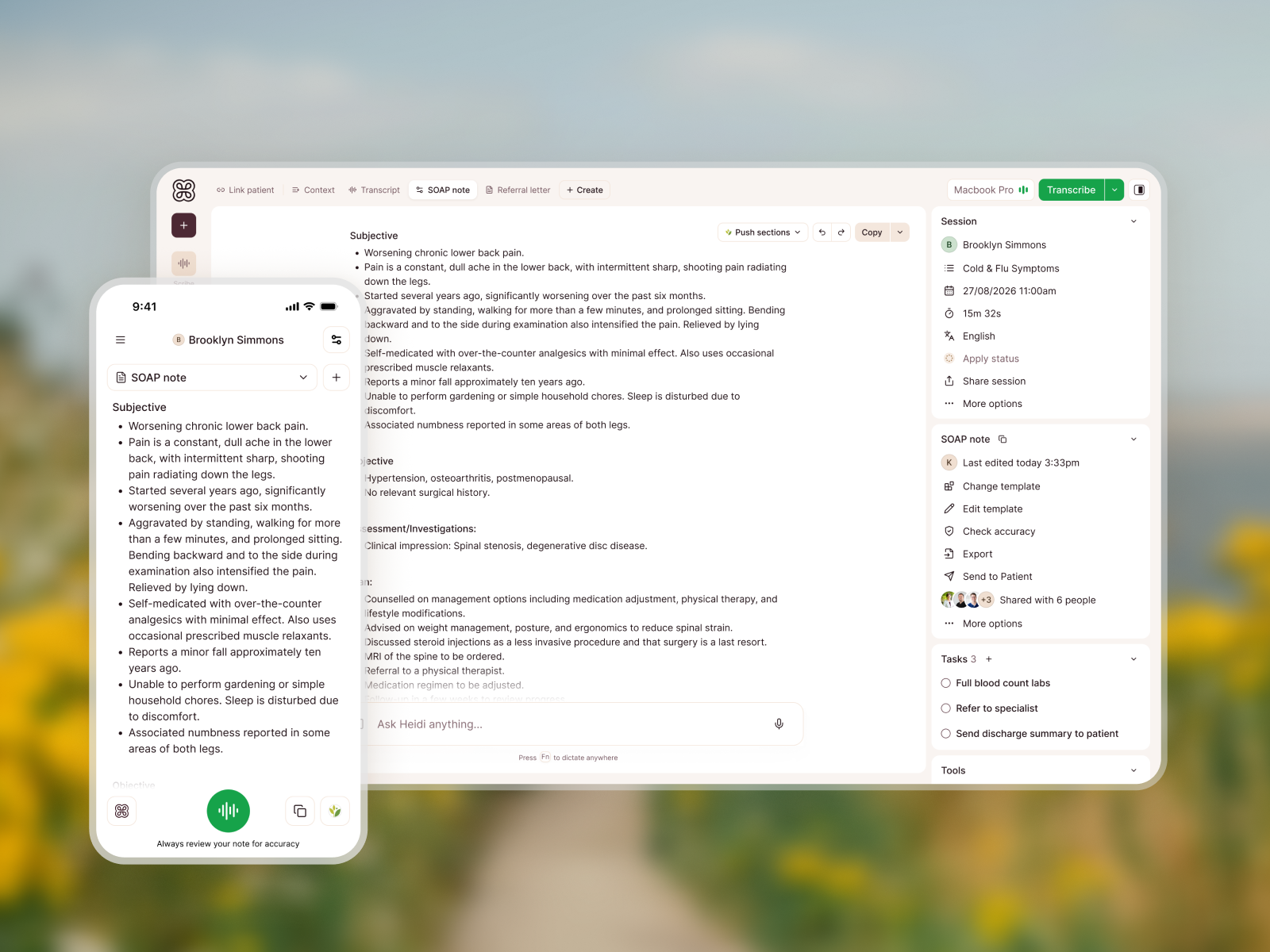
Dictate
Making clinical voice typing effortless, familiar and available wherever clinicians work.
Context
Present when you need it, invisible when you don’t
Heidi Dictate brings voice typing directly into the tools clinicians already use, from electronic health records to referrals and emails. Accessible through a keyboard shortcut or physical dictation device, it works quietly in the background, surfacing only when needed. I designed a minimal floating controller with subtle visual states and audio feedback, giving clinicians confidence and control without interrupting their workflow.
Taking on an $18 billion Dragon
Dragon’s dominance in medical dictation revealed an opportunity beyond simply building another voice typing tool. Many clinicians already trusted dictation, but weren’t ready to hand control over to an AI scribe.
Dictate offered a strategic way to meet clinicians where they were, delivering immediate value through a familiar workflow while introducing them to the Heidi ecosystem. By removing the friction of switching tools, we could create a natural pathway towards adopting Heidi’s broader AI capabilities.
I explored competing products and spoke with clinicians to understand the behaviours worth preserving and the frustrations we could improve.
Onboarding
Setup to speaking in seconds
I designed and built an onboarding experience that got clinicians using Dictate as quickly as possible, rather than making them work through configuration before understanding its value. I used Heidi’s design tenets as a foundation: be like a brilliant colleague, make things effortless for a clinician in their 11th hour, build trust through easy verification, and delight through thoughtful details.
These principles informed everything from smart defaults that reduce cognitive load to live feedback that makes setup easy to understand and recover from. Clinicians could test their keyboard and microphone independently, experience dictation in realistic scenarios before signing up, and personalise their experience by speaking directly into profile fields. Onboarding became a first successful experience of the product, rather than a barrier to it.
- 0%Onboarding completion
- +0%Week 8 retention
- +0%Activation
Hardware
Making the connection feel tangible
For clinicians accustomed to Dragon, physical dictaphones were an extension of their workflow, with years of muscle memory built around their controls. Replacing that familiarity with an abstract list of button mappings would introduce unnecessary friction at the very moment we were trying to make switching easier.
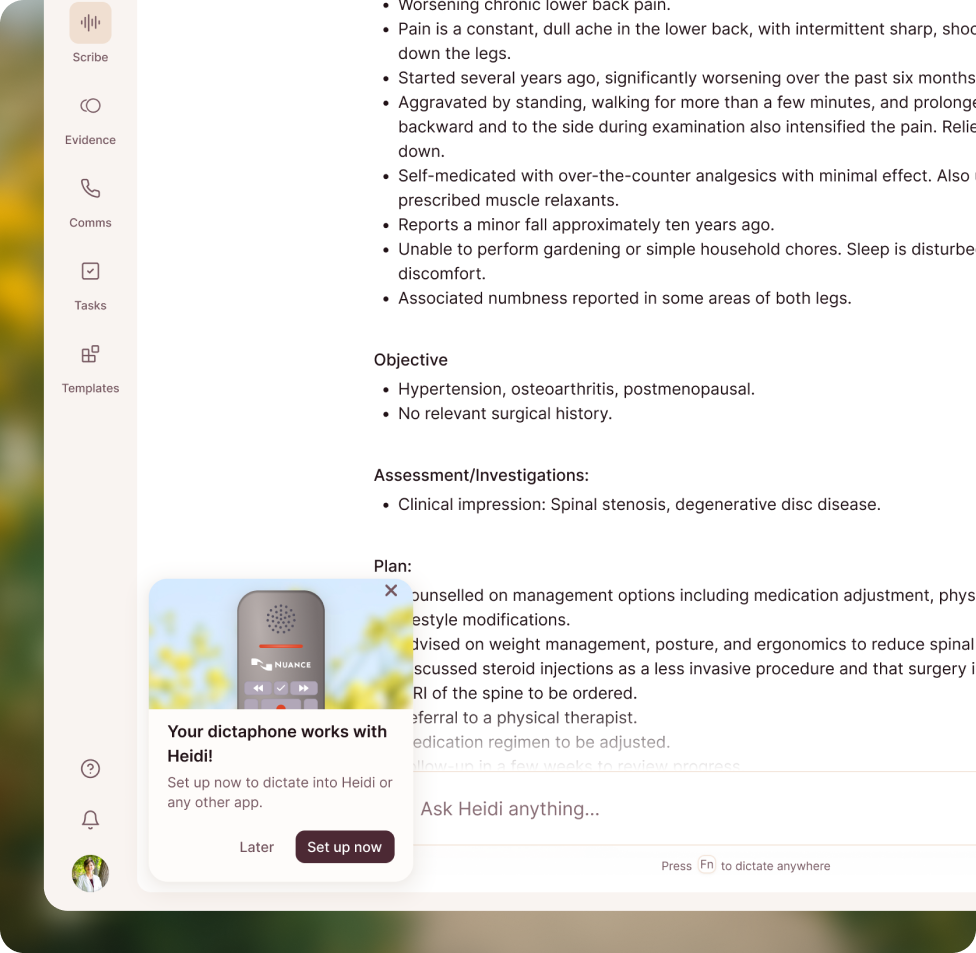
I illustrated the devices from scratch and coded them as interactive SVGs, connecting the physical and digital experiences. Hovering reveals each button’s function, while pressing a physical button highlights its on-screen counterpart. This immediate feedback makes configuration easier to understand, reduces uncertainty about whether the hardware is working, and helps clinicians carry their existing habits into Heidi.
Discovery
The when is just as important as the what
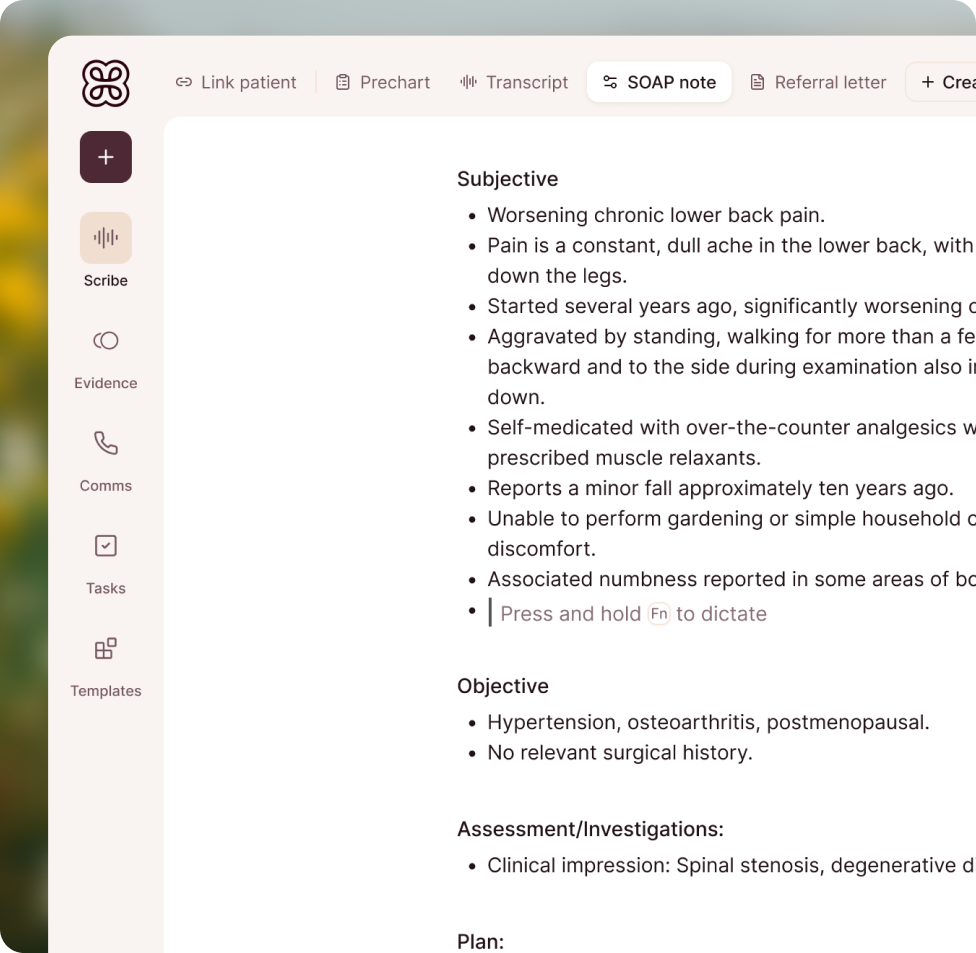
Making Dictate discoverable was only half the challenge. Clinicians work in high-pressure environments, where even a relevant suggestion can feel disruptive if it arrives at the wrong moment. I designed discovery around context and behaviour, rather than competing for attention.
I created contextual prompts for natural pauses in typing, relevant suggestions when exporting or copying notes, and hardware setup invitations triggered by compatible devices. Each interaction was designed to surface value at the right moment, without interrupting the task at hand.
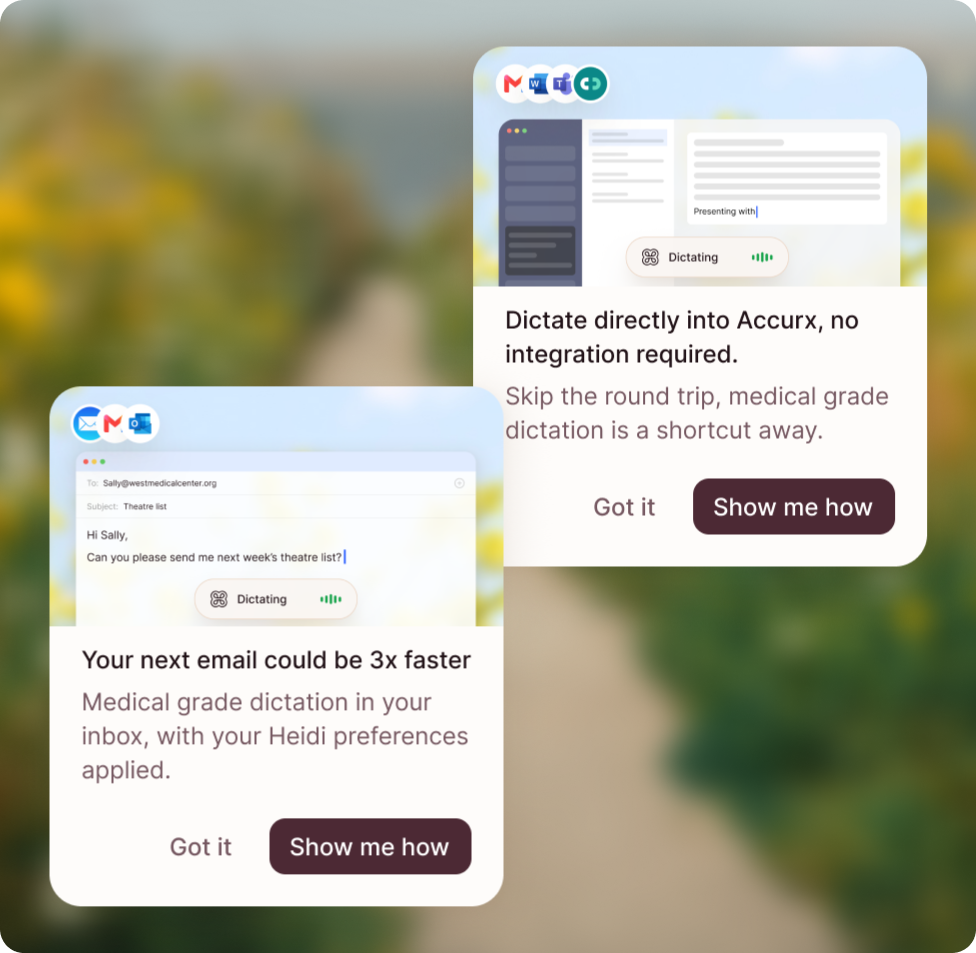
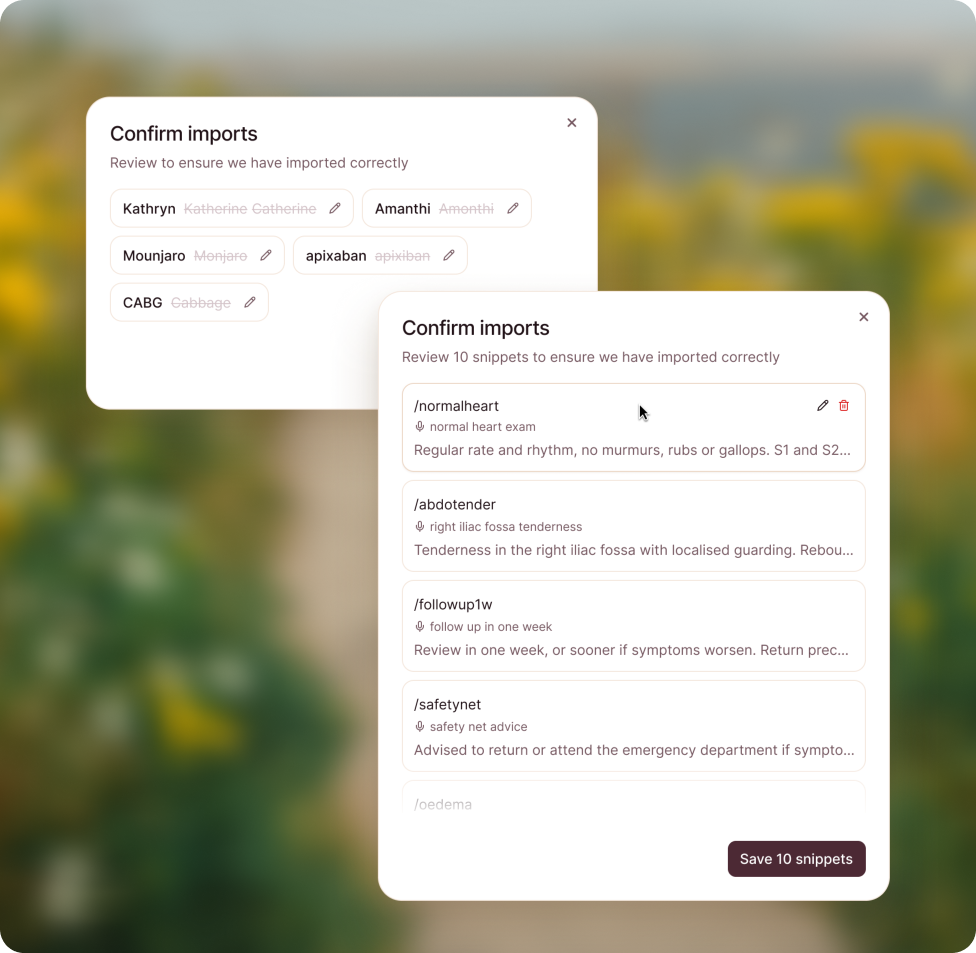
I also designed ways for clinicians to bring their existing vocabulary and preferences into Dictate, reducing the effort of switching and preserving the workflows they’d spent years refining.
Growth
Turning everyday usage into organic growth
I designed personalised, shareable usage statistics to turn Dictate into an opportunity for organic acquisition. By transforming time saved and words dictated into visually engaging milestones, clinicians could celebrate their productivity while introducing Heidi to their peers. The experience was designed to make sharing feel rewarding rather than promotional, creating opportunities for word-of-mouth growth.
Reflection
Learnings & reminders
Making something feel effortless takes a surprising amount of effort. Dictate reminded me how much first impressions, speed to value and ongoing support shape adoption, and how familiar workflows can become a bridge towards trusting something entirely new, particularly AI. It reinforced that copywriting is half the design, and that how we frame value matters just as much as the functionality itself. I also saw how quickly AI-assisted coding is changing what’s possible to prototype and build, making it easier to go the extra mile on the details that delight people. And perhaps most importantly, the when is just as important as the what.